
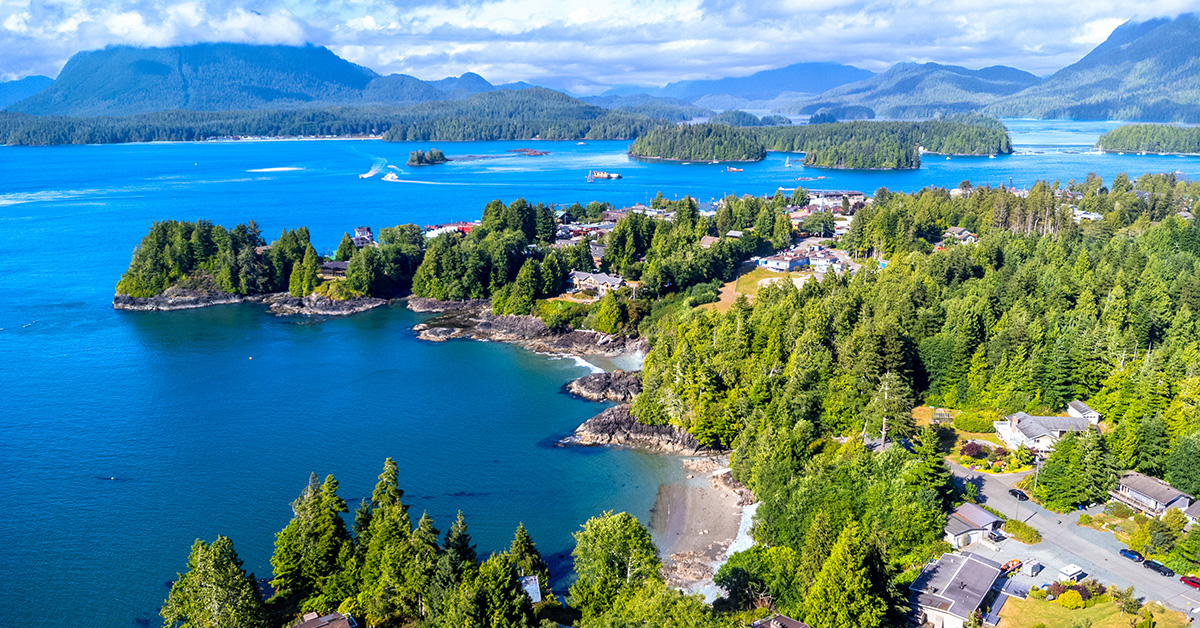
Big landscapes, distinct cultures, and good reasons to slow down
Ibn’s Country Index · National introduction · Reviewed 8 October 2026
Meet Canada
Canada is a country where choosing a direction matters almost as much as choosing a destination. You might spend an evening listening to live music in an Atlantic harbour town, wander a Montréal neighbourhood lined with cafés and independent shops, or watch the light move across a prairie sky. Mountains and lakes are part of the story; the people, languages, and communities around them give the journey its character. [1]
There is plenty to explore, but trying to fit the Pacific coast, the Rockies, Toronto, Québec, and Newfoundland into one short holiday is a reliable way to become better acquainted with airports than Canada.
For most first visits, choose one region or a connected pair. Allow time to notice what makes that part of the country different.
Who might love this country?
Canada may appeal to landscape photographers, wildlife enthusiasts, hikers, paddlers, skiers, music lovers, museum visitors, and travellers interested in Indigenous-led experiences. Its cities also offer neighbourhood life, galleries, festivals, and shopping. [1,2]
You do not need to be an expedition traveller. A trip can revolve around accessible city attractions, scenic journeys, and comfortable bases. Equally, remote adventures require preparation beyond an ordinary sightseeing holiday.
Travellers seeking bargain accommodation and cheap long-distance transport should budget carefully. Canada rewards time; moving quickly across it can cost both money and energy.
The practical basics
Capital: Ottawa. Currency: Canadian dollar (CAD), often written CA$ when clarity matters. Canada comprises ten provinces and three territories. [3]
English and French are the federal official languages. French is the main language in Québec and is also used in communities elsewhere. Do not assume every Canadian speaks both. Indigenous languages and languages brought by immigrant communities are important parts of the country’s linguistic life. [4]
Distances and road speeds use kilometres; temperatures use Celsius. Check local time zones when arranging connections.
What does a visit cost?
All figures below are CAD. These are broad editorial planning allowances for ordinary southern destinations, not measured national averages or booking quotes. Remote northern trips, major events, resort towns, and peak dates can cost substantially more.
| Expense | Planning allowance |
|---|---|
| Coffee | $3–6 |
| Casual takeaway meal | $12–20 |
| Sit-down main dish | $20–40 |
| Hostel dorm, per night | $40–90 |
| Ordinary hotel room, per night | $150–300 |
| City transport | Allow $3–5 per ride; check the operator |
| Museum or paid attraction | Allow $15–40 per adult |
| Guided outdoor excursion | Allow $100–250+; scope matters greatly |
For a sourced transport example, Toronto’s published adult contactless/PRESTO fare is $3.30. Airport services and other operators can have separate fares. [5]
As a secondary benchmark, Budget Your Trip reports approximately $271 per person daily for mid-range independent travel, using traveller and industry data. Treat this as an indicative benchmark, not a forecast for a particular itinerary. [6]
A simple constructed budget for two adults sharing a $220 room, allowing $65 each for food and $30 each for transport and attractions, comes to $205 per person per day before taxes, tips, long-distance travel, and extras.
Sales tax varies by province and purchase; accommodation may have additional levies. Tipping is customary in table-service restaurants, so include it in your budget rather than treating the menu price as the final bill. [7]
A little history
Canada’s history begins with Indigenous Peoples, long before European colonization. First Nations, Inuit, and Métis have distinct histories and living cultures; these terms are not interchangeable.
Confederation in 1867 brought together Ontario, Québec, New Brunswick, and Nova Scotia. The federation expanded over time; Newfoundland joined in 1949, and Nunavut was established in 1999. Immigration has also shaped modern Canada. [3,8]
Colonial expansion involved dispossession and policies aimed at assimilation, including residential schools. Understanding that history belongs alongside appreciating contemporary Indigenous art, businesses, languages, and communities. Choose opportunities to learn directly from Indigenous hosts. [9,10]
Food worth making time for
Think regionally: poutine and tourtière in Québec, Atlantic seafood, prairie ingredients, Pacific seafood, and dishes reflecting Canada’s many immigrant communities. Maple products, butter tarts, and Nanaimo bars may appear along the way, but they do not define every Canadian table.
Seek Indigenous-owned food experiences where available and let the hosts explain their traditions. There is no single Indigenous cuisine.
A neighbourhood market can introduce you to a city as effectively as a restaurant reservation. Leave room for an ordinary bakery or café as well as the meal you planned weeks ahead.
Experiences and highlights
Landscape and wildlife: Consider the Rockies, Pacific coast, prairie grasslands, Atlantic shores, and northern landscapes. Wildlife trips should match the species, season, and location; sightings are never guaranteed. [1,2]
Music and performance: Look beyond headline attractions to local venues and festivals. Montréal and Toronto offer extensive cultural choices; Newfoundland and Labrador’s storytelling and craft traditions add another perspective. Indigenous music and dance include traditional and contemporary expressions. [1,11,12]
History and architecture: Explore Old Québec, city museums, historic sites, and Indigenous cultural centres. Ask whose story a place tells—and whose voice you might still be missing. [1,10]
Shopping, dress, and craft: Browse independent designers, makers’ markets, textiles, jewellery, and regional galleries. When purchasing Indigenous work, ask who made it and where it comes from. Authentic work gives a souvenir a connection to a person, not just a place. [10]
Adventure and gentler alternatives: Hiking, canoeing, cycling, skiing, and coastal excursions can share an itinerary with gardens, waterfront walks, galleries, or scenic transport. Choose the activity for your ability and interests rather than its photograph.
Choose a region
| Region | Possible starting interests |
|---|---|
| British Columbia | Pacific coast, islands, forests, cities, mountains |
| Alberta and the Rockies | Mountain scenery, winter sports, prairie connections |
| Saskatchewan and Manitoba | Grasslands, lakes, cities, Indigenous experiences |
| Ontario | Cities, museums, Great Lakes, northern forests |
| Québec | French-speaking cultural life, historic towns, festivals, regional landscapes |
| Atlantic Canada | Distinct coastal communities, music, islands, maritime history |
| Yukon, Northwest Territories, Nunavut | Distinct northern cultures, landscapes, seasonal light; plan each territory separately |
This is a browsing aid, not a claim that provinces within a grouping are interchangeable. Even a province can require several different travel plans. [1]
Weather and when to go
“Canada is cold” is a poor forecast. Coastal British Columbia, the Prairies, southern Ontario, Atlantic Canada, and the Arctic differ enormously. Summer can be hot; winter conditions vary from rain to severe cold.
For an annual comparison, these are rounded monthly mean temperatures at named stations. They average days and nights, are not daytime highs, and do not describe whole regions. Vancouver, Calgary, and Toronto figures are from JMA’s station-normal tables; Yellowknife uses Environment and Climate Change Canada’s 1991–2020 normals. [13–16]
| Month | Vancouver airport | Calgary airport | Toronto city | Yellowknife |
|---|---|---|---|---|
| Jan | 4°C | −6°C | −4°C | −26°C |
| Feb | 5°C | −7°C | −3°C | −23°C |
| Mar | 7°C | −2°C | 2°C | −17°C |
| Apr | 10°C | 4°C | 7°C | −6°C |
| May | 13°C | 10°C | 14°C | 5°C |
| Jun | 16°C | 14°C | 19°C | 14°C |
| Jul | 18°C | 17°C | 22°C | 17°C |
| Aug | 18°C | 16°C | 22°C | 15°C |
| Sep | 15°C | 12°C | 18°C | 8°C |
| Oct | 10°C | 5°C | 11°C | −1°C |
| Nov | 6°C | −2°C | 5°C | −13°C |
| Dec | 4°C | −7°C | 0°C | −22°C |
For coastal British Columbia, account for wet winters: Vancouver airport’s table shows much more precipitation in November than July. Mountain conditions can differ sharply from nearby cities. These examples are not a harmonized national climate dataset. [13]
For towns and road trips, summer and early autumn are useful starting points, subject to regional weather and services. For alpine hiking, confirm when individual trails lose snow rather than assuming June means summer at altitude. For skiing, use resort conditions. For aurora viewing, darkness and clear skies matter; long northern summer daylight limits opportunities. For foliage, wildlife, and coastal trips, check local seasonal windows.
Getting around
Use realistic door-to-door journey times. Flying may suit distant regions; rail, coach, ferry, car, and urban transit choices depend on the route. A scenic train journey is an experience, not automatically a cheap or quick substitute for flying.
Book essential accommodation, ferries, campsites, and access arrangements for your dates. Do not assume an attraction shown on a map is open or reachable year-round.
For accessibility, check the complete journey: vehicles, paths, lifts, bathrooms, and seasonal surfaces. Reliable mobile service should not be assumed in remote areas.
Culture and etiquette
Courtesy helps, but Canadians do not share one personality. In Québec, beginning with bonjour is a thoughtful introduction; ask which language someone prefers.
At public powwows, follow the host and emcee’s instructions. Ask before photographing, respect restricted ceremonies, and call dancers’ clothing regalia rather than costumes. Rules vary by event. [10]
Respect private land, community access rules, and closures. A landscape that looks empty may be someone’s home or a culturally important place.
Your first few words
English-speaking readers already have a practical starting point across much of Canada. French is useful in Québec and Francophone communities. These are polite standard forms, not a representation of every regional accent. Pronunciations are approximate; French nasal vowels have no exact English equivalent.
| Meaning | French | Approximate pronunciation |
|---|---|---|
| Hello / good day | Bonjour | bohn-ZHOOR |
| Thank you | Merci | mehr-SEE |
| Please | S’il vous plaît | seel voo PLEH |
| Excuse me | Excusez-moi | ehk-skew-zay MWAH |
| Sorry | Je suis désolé(e) | zhuh swee day-zoh-LAY |
| Goodbye | Au revoir | oh ruh-VWAHR |
| Yes / no | Oui / non | wee / nohn |
| Do you speak English? | Parlez-vous anglais ? | par-lay voo ahn-GLEH |
| How much does it cost? | Combien ça coûte ? | kohm-BYAN sah KOOT |
| Where are the toilets? | Où sont les toilettes ? | oo sohn lay twah-LET |
| I need help | J’ai besoin d’aide | zhay buh-ZWAN DEHD |
Indigenous languages are numerous and place-specific. Learn a local greeting from the community or host rather than using one phrase as if it represents all Indigenous Peoples.
Safety and health
Protect belongings in cities and vehicles. Solo travellers should plan late-night transport and accommodation carefully. LGBTQ+ visitors should assess specific settings without assuming either universal acceptance or danger.
For outdoor trips, prepare for cold, heat, sudden weather changes, wildfire smoke, and terrain. Check closures, road reports, and avalanche forecasts where relevant. Mobile coverage and rescue access may be limited. [17]
Give wildlife space and never feed it. Parks Canada guidance for Jasper specifies at least 30 metres from elk, deer, and moose, and 100 metres from bears and other carnivores; follow the rules for the place you visit. [18]
Visitors should carry medical insurance: publicly funded healthcare does not mean free treatment for tourists. Canadian residents travelling domestically should also check coverage for services such as ambulance transport. [19]
Explore further
- Destination Canada: Destination Canada
- Indigenous-led travel: Destination Indigenous
- Parks Canada: Parks Canada
- Provincial and territorial discovery: Places to go in Canada
- Weather and alerts: Canadian weather and alerts
- Official entry guidance: Visit Canada: official guidance
Use regional tourism sites and local operators once you have chosen your area. National introductions are the starting point.
Before you go
For Canadian residents travelling within Canada, immigration entry requirements are not part of an ordinary domestic journey. International visitors should check requirements for their passport and arrival method: visas and eTAs are different, and exemptions apply. Returning Canadians and permanent residents should check the documents appropriate to their status. [20]
Power: standard general-purpose outlets are Type A and Type B, 120 V, 60 Hz. Type A has two flat pins; Type B adds a grounding pin. Check your device’s label: an adapter changes plug shape, not voltage. A charger marked 100–240 V, 50/60 Hz usually only needs an appropriate adapter. [21]
Check medication rules, particularly for controlled substances; do not assume one allowance applies to every prescription. [22]
Plan appropriate clothing, activity insurance, and current access arrangements. Cannabis rules vary within Canada, and taking it across the international border without authorization is illegal. [17]
Why Canada stays with you
An evening of music can turn an unfamiliar town into somewhere you wish you had booked another night. A quiet lake, a maker explaining their work, or the light stretching across an open prairie can be as memorable as the landmark you came to see. Canada offers room for both grand journeys and small discoveries—choose your corner, slow down, and let it become more than a photograph.
In 2025, Canada recorded approximately 29.6 million non-resident visitor arrivals: 22.8 million from the United States and 6.8 million from elsewhere, according to Statistics Canada. This sums its rounded annual figures, includes same-day and overnight arrivals, and counts visits rather than unique people; it excludes Canadians returning home. [23]
Research notes and sources
This is an introductory editorial draft. Cost allowances are estimates. Variable information needs rechecking for actual travel dates.
10. Pow Wow 101