
Caribbean reefs, Maya artistry, and mountains worth slowing down for
Ibn country index · Last reviewed: 11 October 2026
Meet Honduras
Honduras has a way of making a single holiday idea feel rather small. Perhaps you arrived thinking about a beach, only to discover that there are carved Maya monuments, forested mountain trails, lakeside birdwatching, and living cultural traditions competing for a place in your itinerary. Your beach is still there, of course. It simply has rather interesting company.
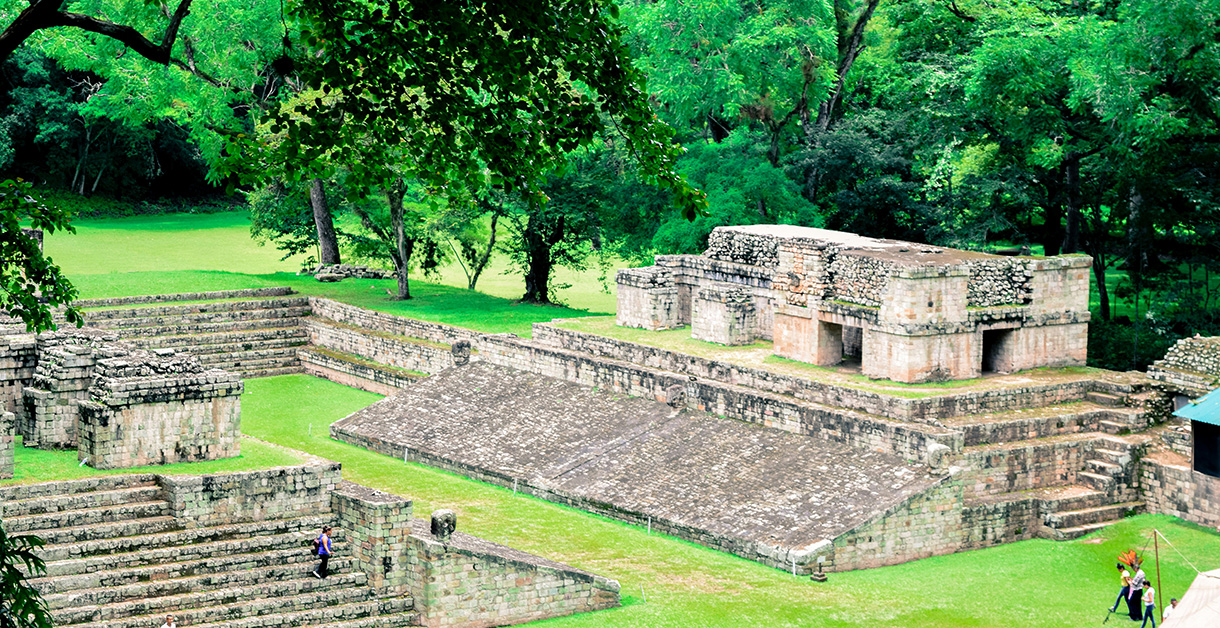
In the Bay Islands, wooden waterfront buildings and dive boats sit beside water that can shift from pale turquoise to deep blue within a few steps. Inland, the landscape rises into coffee-growing hills and greener, cooler country. At Copán, stone portraits and intricate carvings invite you to look closely; around Lake Yojoa, the attraction might be a waterfall, an early morning birding walk, or the pleasure of giving yourself an afternoon without a schedule.
There is no single Honduran culture to neatly package into a paragraph. Indigenous communities, Garifuna heritage, Spanish colonial history, and the distinctive Caribbean histories of the islands all contribute to the country you encounter today. Listening to the people who live here can be as rewarding as ticking off a landmark.
Honduras also asks you to plan thoughtfully. Conditions vary considerably between regions, and some areas carry serious travel warnings. Choose your route with care, leave room for weather and transport changes, and you can build a trip with much more depth than the postcard first suggested.
Who might love this country?
- Divers and snorkellers drawn to Caribbean reefs and a choice of island bases.
- History and architecture enthusiasts who enjoy detailed sites such as Copán rather than rushing past them.
- Birdwatchers, photographers, and nature lovers interested in forest, waterfalls, and lakes as well as beaches.
- Curious cultural travellers who want locally hosted encounters with music, craft, food, and everyday life.
- Travellers watching their budget who can choose modest accommodation and local meals, while allowing for dependable transport and activities.
Families and travellers seeking comfort can find suitable island hotels and guided mainland trips. Honduras may require more preparation if you need consistently accessible infrastructure, extensive English-language services, or specialist healthcare close at hand. Ask about the exact property and excursion rather than relying on a destination-wide label.
The practical basics
| Essential | What to know |
|---|---|
| Location | Central America, with a Caribbean coast and a shorter Pacific coastline on the Gulf of Fonseca |
| Capital | Tegucigalpa |
| Main language | Spanish; English is widely used in parts of the Bay Islands and their tourism businesses, but less dependable across the mainland |
| Other languages | Garifuna and Indigenous languages, including Miskito; language use varies by community |
| Currency | Honduran lempira (HNL), commonly written L; many island accommodation and dive businesses quote in US dollars |
| Time | UTC−6, without seasonal clock changes |
| Useful arrival points | Roatán for island trips; San Pedro Sula for many northern and western mainland routes; Palmerola, near Comayagua, for central Honduras |
Ask which currency a price uses before agreeing to it. Carry smaller lempira notes for everyday purchases, and confirm card acceptance with smaller businesses.
What might a day cost?
Honduras can be less expensive than Canada, especially for local meals and modest mainland accommodation. A beachfront island stay with diving, cocktails, and private transfers belongs to a different budget altogether.
These are planning ranges, not measured national averages or booking quotes. They reflect published traveller examples and operator prices checked in October 2026. For easy comparison, CAD amounts use rounded planning conversions of L1 ≈ C$0.053 and US$1 ≈ C$1.40; the latter is an illustrative allowance, not a live exchange-rate quote. Your bank’s rate and fees will differ.
| Expense | Indicative local/quoted price | Approximate CAD |
|---|---|---|
| Baleada, depending on filling and location | L50–80 each | C$3–4 |
| Simple sit-down meal | Allow L150–300 per person | C$8–16 |
| Tourist-area restaurant meal | Allow L300–600+ per person | C$16–32+ |
| Hostel dorm bed | Allow US$12–30 per person/night | C$17–42 |
| Modest private room | Allow US$30–70 per room/night | C$42–98 |
| More comfortable island hotel | Allow US$80–180+ per room/night | C$112–252+ |
| Guided nature excursion | Set aside US$30–80+ per person; obtain a specific quote | C$42–112+ |
Island lodging, holidays, air-conditioning, and seafront locations can push costs above these ranges. Room figures do not guarantee breakfast or taxes. Tour costs depend heavily on transport, group size, guide, equipment, and admission fees.
Two useful published examples, rather than estimated averages:
- Galaxy Wave lists an adult regular-class La Ceiba–Roatán one-way fare of US$31, about C$43. The reverse direction is separately priced. Check the final charge, baggage policy, and sailing before buying.
- Paradise Divers in Utila lists two tank dives for US$58, about C$81, with one night of accommodation and diving equipment described as included. Confirm the room type, taxes, availability, and package conditions directly.
For a modest mainland trip, an initial allowance of C$60–100 per person/day, sharing a simple private room, is a useful starting point. For the Bay Islands, begin nearer C$90–160, before substantial diving, private transfers, or luxury lodging. These are budgets to test against your itinerary—not claims about what every traveller spends. International flights are excluded.
A little history before you arrive
Long before modern borders, the area was home to diverse Indigenous peoples. Copán became an important Maya centre, remembered especially for its sculpture and carved inscriptions. Its archaeological remains introduce one part of Honduras’s history; they do not represent every community in the country.
Spanish colonisation brought profound changes, including exploitation and disruption of Indigenous societies. Honduras declared independence from Spain in 1821, later joined the Central American federation, and emerged as a separate republic as that federation broke apart. The US Office of the Historian provides a short outline of that transition.
Garifuna communities established themselves along the Caribbean coast following displacement from St Vincent in the late eighteenth century. Their language, music, and dance remain living heritage, recognised by UNESCO. The Bay Islands developed their own history of British influence and Caribbean connections, helping explain why an island visit can feel quite different from a mainland one.
Food worth making room for
Start with a baleada: a folded flour tortilla traditionally filled with beans, cheese, and cream, with additions such as eggs or avocado. It is an excellent introduction to the reassuring idea that breakfast can be both simple and very satisfying.
Look for plato típico, a plate whose combination might include beans, rice, plantain, cheese, and meat or eggs; pastelitos, stuffed fried pastries; and sopa de caracol, a conch soup associated with the Caribbean coast. Coastal and Garifuna cooking offers coconut, seafood, and plantain in different combinations. Recipes and names vary—ask what a kitchen’s version contains.
Coffee deserves its own pause, particularly if you visit a growing region. Vegetarians can often work with beans, eggs, tortillas, and plantain, but should ask about meat stock or lard. Travellers avoiding gluten should remember that baleadas use wheat tortillas. For allergies, explain the ingredient and cross-contamination concern clearly; a translated phrase card can help.
Experiences and highlights
Copán: history you can actually look in the face
The Maya Site of Copán is especially rewarding for its carved stone stelae, sculptural detail, and Hieroglyphic Stairway. A knowledgeable guide can turn impressive stonework into stories about rulers, ceremony, and a complex society. Allow time for the town of Copán Ruinas as well, and check which museum or additional areas your ticket includes.
Roatán: choose the island experience that suits you
West Bay is a natural place to research for beach hotels and snorkelling excursions; West End for a waterfront village base with restaurants and dive shops. They are different places, despite the easily confused names. Boat trips, kayaking, and sailing excursions can widen the experience beyond a beach chair. Confirm departure point, sea conditions, and operator standards.
Utila: give the underwater world some time
Utila is well known for dive training and a sociable diving community. Certified divers can compare reef trips, while beginners can research courses rather than choosing on price alone. Whale sharks are a possible wildlife encounter, never a scheduled appointment: avoid operators promising sightings or encouraging touching, chasing, or crowding animals.
Lake Yojoa and Pulhapanzak: a different kind of blue and green
Around Lago de Yojoa, combine birdwatching, a guided lake outing, and time in the surrounding hills. Nearby Pulhapanzak waterfall offers a memorable change of pace from the coast. The national tourism nature guide is a useful starting point. Ask separately about the demands and safety of any behind-the-waterfall excursion; viewing a waterfall and entering its spray are very different activities.
Pico Bonito and the Cangrejal Valley: forest with an adventurous streak
Near La Ceiba, research guided forest walks in the Pico Bonito area and rafting in the Cangrejal River valley. You can enjoy birds, river scenery, and a forest lodge without signing up for the most strenuous outing. Rain affects trails and river conditions; use established guides and arrange dependable transfers through La Ceiba.
Tela: beaches, botany, and Garifuna heritage
Use Tela as a starting point for researching Lancetilla Botanical Garden, coastal excursions to Jeannette Kawas National Park, and locally hosted visits to Garifuna communities such as Miami or Tornabé. Seek community-led opportunities to learn about drumming, dance, and cooking. A community is someone’s home; a performance or ceremony is not automatically open to visitors.
Gracias and La Campa: living craft in the western highlands
The town of Gracias offers a base for western mountain scenery, while La Campa is associated with Lenca pottery traditions. Ask locally about visiting working artisans and buying directly from makers. Travellers wanting more demanding hiking can investigate Celaque National Park with a guide, realistic fitness expectations, and current trail information.
Comayagua: give a town square an afternoon
Comayagua’s historic centre and cathedral offer architecture, museums, and a slower urban stop. Around Holy Week, elaborate sawdust carpets bring colour and craftsmanship to the streets; dates, crowds, and accommodation demand require advance planning. The national archaeology and history guide introduces places to explore beyond the islands.
Choose your region before choosing your hotel
- Bay Islands: reefs, beaches, and island stays; often higher visitor-facing prices.
- Western Honduras: Copán, Gracias, and highland culture; allow time for road journeys.
- Lake Yojoa and central Honduras: birding, waterfalls, and historic towns.
- Tela and the north coast: beaches, forest, and Garifuna heritage, with particular attention to transport and local security.
For a shorter first trip, choosing one or two bases is usually more rewarding than trying to connect every highlight. Check the whole route against current advisories, including places you pass through.
Weather: warm does not always mean dry
Honduras can rescue you from a Canadian winter, but it cannot promise to keep your laundry dry. Elevation and coast matter enormously: the Caribbean islands, central uplands, and hotter Pacific lowlands do not share one tidy weather calendar.
The following are rounded average daily highs/lows in °C, not daily mean temperatures or a forecast. They use station-based reports published by Timeanddate/CustomWeather: Roatán, 2012–2021, and Tegucigalpa, 1992–2021. Different observation periods limit direct comparison; neither station represents every nearby destination.
| Month | Roatán high / low | Tegucigalpa high / low |
|---|---|---|
| January | 28 / 22 | 27 / 14 |
| February | 29 / 23 | 29 / 14 |
| March | 30 / 23 | 31 / 15 |
| April | 31 / 24 | 32 / 17 |
| May | 32 / 25 | 31 / 18 |
| June | 32 / 26 | 29 / 18 |
| July | 32 / 25 | 29 / 18 |
| August | 32 / 26 | 29 / 18 |
| September | 32 / 26 | 29 / 18 |
| October | 32 / 24 | 28 / 17 |
| November | 29 / 23 | 27 / 16 |
| December | 29 / 22 | 27 / 15 |
Explore the underlying Roatán and Tegucigalpa climate tables when planning dates.
The regional difference: the central interior generally has a drier period around December–April and a wetter period around May–October, with transitions varying locally. The Caribbean coast and islands can remain wet into the northern winter: the Roatán Tourism Bureau identifies October–December as its principal rain months. Higher western locations and exposed mountain trails can be much cooler than these tables suggest; the Pacific lowlands are generally hotter.
When should you go?
- For island beaches and diving: March–May is a useful period to investigate for relatively drier conditions. Wind, visibility, and sea state still vary.
- For mainland towns and hiking: December–March often offers a helpful balance of drier weather and less intense heat; mountain weather still needs checking.
- For November or December warmth: the islands remain warm, but bring rain protection and flexible boat plans. The interior may suit a trip mixing towns and nature as its drier season develops.
- For seasonal celebrations: check Holy Week dates and book ahead; busy periods can change the atmosphere and price of a destination.
Atlantic hurricane season runs June–November. Disruption can also come from heavy rain and cold fronts without a named hurricane. Keep an eye on the US National Hurricane Center and local alerts before coastal travel.
Getting around without turning your holiday into a transfer
Match the arrival airport to your main region. Palmerola is near Comayagua, so a flight marketed for Tegucigalpa does not place you in the capital’s centre. Check the actual airport and arrange the onward journey.
For mainland distances, compare reputable intercity services, organised shuttles, and private transfers recommended by established accommodation providers. The UK’s road-travel guidance highlights attacks on vehicles and recommends particular care with transport. Plan journeys in daylight and avoid building an itinerary around the cheapest possible connection.
Ferries connect La Ceiba with the islands, but schedules and conditions can change. Leave a generous buffer before an international flight, especially when your connection depends on a boat. Arrange mainland port transfers rather than assuming you should explore the area on foot with your luggage.
Rental cars can add flexibility, but road quality, navigation, insurance, and security deserve serious consideration. Ask your accommodation about the actual route. For longer stays or remote work, request a recent internet speed test and ask about power interruptions and backup arrangements.
Cultural tips: curiosity works best with courtesy
A buenos días before a question or purchase is a useful beginning. Learn people’s names, ask rather than assume, and let a conversation unfold without treating friendliness as an obligation.
Garifuna and Indigenous traditions are living cultures, not costumes supplied for travellers. Ask permission before photographing people, workshops, or ceremonies, and respect a refusal. Buy craft directly from makers when possible, and ask about the process—it often gives the object far more meaning.
Beachwear belongs at the beach; dress more modestly for churches and everyday town errands. Agree taxi and excursion prices beforehand. For restaurant tips, check whether service has already been included and ask your host about local practice.
Your first few words
Spanish uses the same alphabet as English, so a separate romanised column would repeat the spelling. These pronunciation guides are English approximations; capital letters show the stressed syllable. Honduran accents vary, and a friendly attempt is more useful than waiting for perfection.
| English | Spanish | Try saying |
|---|---|---|
| Hello | Hola | OH-lah |
| Good morning | Buenos días | BWEH-nohs DEE-ahs |
| Thank you | Gracias | GRAH-syahs |
| Please | Por favor | por fah-VOR |
| Excuse me / may I pass? | Con permiso | kohn pehr-MEE-soh |
| Excuse me, to get attention | Disculpe | dees-KOOL-peh |
| I’m sorry | Lo siento | loh SYEHN-toh |
| Goodbye | Adiós | ah-DYOHS |
| Yes / no | Sí / no | see / noh |
| Do you speak English? | ¿Habla inglés? | AH-blah een-GLEHS |
| How much does it cost? | ¿Cuánto cuesta? | KWAHN-toh KWEHS-tah |
| Where is the bathroom? | ¿Dónde está el baño? | DOHN-deh ehs-TAH ehl BAH-nyoh |
| Help! | ¡Ayuda! | ah-YOO-dah |
Download an offline Spanish dictionary or translation pack before leaving reliable Wi-Fi. These phrases are a starting point; they do not replace a clear explanation of a medical problem or allergy.
Safety and health: plan for the place you are actually visiting
At review, Canada advises exercising a high degree of caution in Honduras and avoiding non-essential travel to specified regions. The Bay Islands have lower violent crime than the mainland, but theft and assaults occur. Copán Ruinas is an exception to one border warning; do not generalise that to the whole border. Read the complete Canadian advisory, including route restrictions, before booking.
Choose secure accommodation and reputable transport. Avoid isolated beaches after dark, keep valuables discreet, and do not resist a robbery. Ask a trusted local host about the specific neighbourhood and journey; familiarity does not make every route safe. Protests and security operations may interrupt travel.
Solo women: harassment can occur; arrange arrivals, choose well-reviewed accommodation, and seek recent reports from women who used the same route. Keep control of drinks and avoid isolated night journeys. LGBTQ+ travellers: same-sex sexual activity is legal, but discrimination and hostility remain concerns. Research welcoming accommodation and local conditions; the UK guidance discusses public affection and regional attitudes.
Water and wildlife: ask about currents, boat traffic, and lifeguards before swimming. Use established dive operators and follow training and medical advice, including no-fly intervals after diving. Never touch coral or feed wild animals. On forest walks, wear appropriate footwear, watch where you step or place your hands, and use a guide for unfamiliar trails. Strong river flow and waterfall access deserve the same respect as ocean conditions.
Health: use mosquito protection; dengue and malaria require itinerary-specific advice. Drink reliably treated water. Discuss vaccines and medication with a travel-health clinician, and confirm the legality and supply of your prescriptions. Healthcare may be limited away from major towns; arrange insurance covering medical evacuation and your actual activities. The UK health page provides further pointers. 911 is the emergency number, but response and access can be limited.
Explore further
- Honduras Travel — national tourism information and destination ideas.
- Copán Chamber of Commerce and Tourism — regional information for Copán.
- UNESCO: Copán — context for the archaeological site.
- UNESCO: Garifuna heritage — language, dance, and music.
- Honduran immigration authority — entry and immigration information; much of the site is in Spanish.
Before you go
- Canadian passport holders: Canada currently lists six months’ passport validity from entry and no tourist visa for stays up to 90 days. The officer determines the actual permitted stay. Other passports require separate checks.
- Regional trips: CA-4 travel involves a shared regional allowance, not an automatic fresh 90 days at each border. Check the stamps and rules for every country.
- Forms and transit: complete the required customs declaration and check transit-country requirements. Yellow-fever documentation may depend on countries visited or transited; verify the full route.
- Insurance and medicines: confirm activity cover, evacuation, prescription legality, and adequate supplies. Longer stays or remote work need separate immigration and tax research.
- Power: Type A and B outlets, generally 110–120 V, 60 Hz. Electrical Safety First lists 120 V. Canadian plugs usually fit; some outlets lack a ground connection. Check the device label—an adapter changes the plug shape, not the voltage, and does not create grounding.
- Practical backup: save reservations and maps offline, carry rain protection and sun protection, and ask about drinking water, internet, and accessibility at your exact accommodation.
Why Honduras stays with you
Honduras can give you the quiet concentration of studying a carved face at Copán and the wide-eyed delight of watching a reef come alive beneath you. Around Lake Yojoa, birdsong and waterfall spray offer another rhythm, while a locally hosted conversation or craft visit can turn a place on the map into somewhere you begin to understand. Its greatest invitation is the variety: islands, mountains, history, and living traditions, each deserving time. Choose your route thoughtfully, and leave room for the part of the country you had not expected to love.
Tourism in context: Honduras’s National Investment Council reports more than 3.1 million international visitors in 2025. This broad visitor total includes cruise and other day visits, alongside overnight tourists; it should not be presented as 3.1 million unique holidaymakers staying in the country. Source: CNI, May 2026; category context: reporting on the 2025 figures.